
How to build a WhatsApp chatbot – with examples
- 2025-05-06 18:18:32
- huibangren
- Industry News,Product News
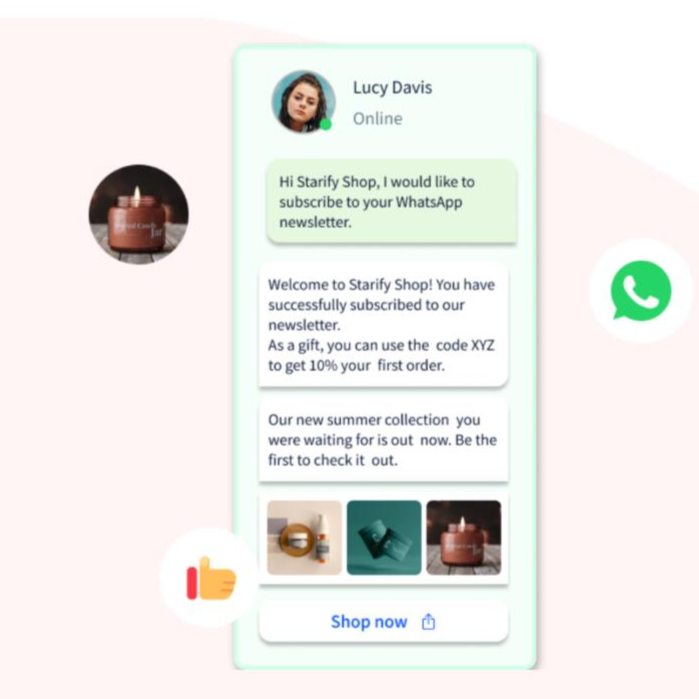
Are you convinced that building a WhatsApp chatbot could be a game-changer for your business, yet feel lost about where to begin? (If you're still on the fence, it's worth checking out the practical chatbot examples at the end of this blog).
You might assume that developing these chatbots is a complex and costly endeavor. But think again! Thanks to today's advanced technology, even those with no technical background can craft a chatbot in just a few minutes. All it takes is the right tool that guides you through the entire process step by step.
This guide is your comprehensive roadmap to planning, designing, and building a WhatsApp chatbot—without writing a single line of code.
Which WhatsApp Chatbot Suits My Needs Best?
We've already established that we're not developers, right? If you are, then you should explore our WhatsApp Business Platform.
We've already established that we're not developers, right? If you are, then you should explore our WhatsApp Business Platform.
What you'll need is a chatbot building platform like Answers. It takes care of all the technical heavy lifting, generating chatbot code based on rules you define in an intuitive, user-friendly manner. Plus, it simplifies the testing and deployment process.
The first crucial step is to determine your goals for the chatbot. In other words, what business challenges do you want it to address?
Cut Contact Center Costs: Build a chatbot capable of answering common customer queries, such as "What's my account balance?" or "What are your business hours?" This way, you can handle simple inquiries without tying up human agents.
Boost Lead Generation and Sales: When potential customers visit your website and want to make an inquiry before purchasing, a chatbot can provide instant answers. It can show product videos, send brochures, and even complete sales transactions—all within WhatsApp, eliminating the need for human intervention. If human input is required, the chatbot can schedule appointments with sales representatives.
Simplify Form Filling: Let's face it—no one enjoys filling out forms. It's a tedious task at best. A conversational chatbot can ease this burden by collecting essential information. Whether it's for a loan application or phone contract renewal, it can extract data from a photo of a passport or other ID. Requiring customers to repeatedly enter information the business already has is a major source of frustration.
Enhance Customer Engagement: The possibilities for delighting and engaging customers are endless. Brands that run daily quizzes and simple games via chat have seen excellent results. The popularity of games like Wordle proves that simple ideas can become internet sensations.
Types of WhatsApp Chatbots
Once you've defined your business objectives, it's time to consider the type of chatbot that will best meet your needs. Chatbots excel at improving the customer experience by offering round-the-clock service. This, in turn, reduces the workload of your contact center, allowing agents to focus on more complex inquiries.
Once you've defined your business objectives, it's time to consider the type of chatbot that will best meet your needs. Chatbots excel at improving the customer experience by offering round-the-clock service. This, in turn, reduces the workload of your contact center, allowing agents to focus on more complex inquiries.
Keep in mind that a simple, purpose-built chatbot can deliver significant value. It's often wise to start with a basic use case and gradually expand to more advanced features as you gain experience.
Here are four types of chatbots to consider:
- Rule-Based Chatbots
These are the simplest kind of WhatsApp chatbots, and they can be created in minutes. They present users with a list of options, either through interactive buttons in the user interface or by asking for a specific response (e.g., "Option A").
Don't underestimate their utility. For example:
[Insert simple interaction example here]
It's a quick and straightforward exchange, yet it saves customers valuable time on hold and frees up agents to handle more complex issues.
- Intent-Based Chatbots
These are more advanced chatbots that utilize natural language processing (NLP) to understand what users are trying to achieve—their "intent."
For instance, the following phrases would all trigger the same response:
"account balance"
"what is my account total?"
"how much is in my current account?"
These bots aim to mimic human conversation, similar to virtual assistants like Alexa or Siri. The more data they have access to, the better they can understand and respond to a wide range of user questions.
Training an intent-based chatbot requires time and resources, but you can mitigate this by crowdsourcing intents from your chatbot provider or involving multiple team members in the process. The more input you have, the more accurately the chatbot can handle diverse user inquiries.
Ultimately, an intent-based chatbot can offer customers a unique and memorable experience.
- Secured Chatbots
While not a distinct type on its own, security is a crucial feature for chatbots handling sensitive information. WhatsApp already provides robust encryption for messages and media, but for data like financial or personal details, you can add an extra layer of security. This might involve user authentication, similar to logging into an online account or verifying identity with a customer service agent.
You can even incorporate biometric authentication methods, such as face scanning, making the security process as simple as taking a selfie.
- Trusted Personal Assistants
Advancements in secure chatbot technology have expanded the range of applications. One growing area is the use of WhatsApp chatbots as personal assistants for tasks like healthcare management, financial planning, or addiction recovery. People trust these chatbots with personal information because of the valuable support and advice they receive in return.
Take the Megi Health Platform, for example. As an Infobip partner, they developed a WhatsApp chatbot to enhance cardiovascular care for their patients. The chatbot, also named Megi, enables two-way data exchange. Patients can share symptoms and blood pressure readings, and Megi responds with relevant support and information. When necessary, it connects patients directly with medical professionals.
Patients often comment that interacting with Megi feels like talking to a real person, and they appreciate the always-available service. While human care is irreplaceable, chatbots offer a cost-effective way for organizations to supplement professional services.
Check out the full story by clicking the link below.
Header image for blog about how to easily build a chatbot for WhatsApp.
Megi Health Platform: Optimizing patient care with an interactive chatbot built using Infobip Answers
Healthcare
How to Build a WhatsApp Chatbot
Let us show you just how easy it is to create a chatbot that engages customers in natural, meaningful conversations using our chatbot building tool, Answers.
Let us show you just how easy it is to create a chatbot that engages customers in natural, meaningful conversations using our chatbot building tool, Answers.
Sign up for a free Infobip account and follow these steps to build your very own WhatsApp chatbot:
We recommend checking out our Getting Started Guide to understand what you can achieve with the Infobip portal and the free messages you're eligible for.
Step 1: Getting Started
[Include a description of where to find Answers in the portal menu, similar to the original]
The chatbot builder features a user-friendly interface with various elements that you can drag and drop to design the chat structure and flow. These elements are categorized into three groups based on their function:
Chatbot sends
Chatbot receives
Chatbot actions
Chatbot receives
Chatbot actions
Here's how it works:
Drag an element onto the workspace
Configure it using the side panel
Link it into the chat flow
Configure it using the side panel
Link it into the chat flow
Step 2: Create a Welcome Message (with Fallback Options)
Begin with a friendly, engaging message to greet users. Add a Send Text element, customize it with a welcome message, and include a question to start gathering user information.
Next, add a User Input dialogue to capture their responses. You can store information like names, account numbers, or product preferences, allowing the chatbot to reference this data later and avoid repetitive questions.
To handle unexpected responses or silence from users, add Repeat or Fallback options at key points in the chat flow.
Step 3: Create a Menu of Options
After the introduction, build a menu so users can select the option they're interested in. Start by adding a Send Text dialogue to present the menu choices.
Link the welcome message to the menu using a Go To Dialog element. Then, use additional Text elements to provide context and list the available options clearly.
You can also add a Delay option from the Bot Actions menu to give users time to read and process messages. Finally, add a User Input element to capture their selection and configure the Synonyms option to account for different ways users might respond.
Step 4: Link Menu Options to Actions
For each menu option, define an appropriate action. Do this by adding a Go To Dialog for each response possibility.
Enhance the user experience by incorporating media such as images and videos. For example, send a video if a user requests company information or share a location if they ask for directions.
Step 5: Create a Seamless Exit Path
Once the chatbot has addressed the user's query, offer a smooth way to end the conversation. A simple question like "Can I help you with anything else?" works well, accompanied by appropriate response options.
When the interaction concludes, add a Close session attribute to reset the chatbot and clear any stored data, if required for compliance.
Step 6: Test Your Chatbot
Before launching your chatbot, use the Simulation option to test its performance. This allows you to see how it will interact with users and fix any issues. It's also a good idea to have others test the chatbot, as they may spot problems you missed.
When you're satisfied, click Activate, and your chatbot will be live!
This is just a basic example of a rule-based chatbot. Using the same approach, you can create chatbots of varying complexity and sophistication. Check out this video for more inspiration.
Can I Use My WhatsApp Chatbot with Other Chat Apps?
Many organizations start with a WhatsApp chatbot due to its immediate benefits. However, in some regions, other messaging apps like Viber, Facebook Messenger, or Telegram are also popular. Unfortunately, because each app has a unique underlying architecture, you can't simply transfer your WhatsApp chatbot to another platform.
Many organizations start with a WhatsApp chatbot due to its immediate benefits. However, in some regions, other messaging apps like Viber, Facebook Messenger, or Telegram are also popular. Unfortunately, because each app has a unique underlying architecture, you can't simply transfer your WhatsApp chatbot to another platform.
The good news is that by partnering with a cloud communications platform that offers a multi-channel chatbot building solution, you can streamline the process. Our chatbot building platform, Answers, supports the following platforms:
WhatsApp + Voice
Viber
Line
Messenger
RCS
SMS
Telegram
Live chat
Viber
Line
Messenger
RCS
SMS
Telegram
Live chat
Boosting Engagement with WhatsApp – 4 Useful Hacks
The great thing about WhatsApp chatbots is that you don't have to wait for customers to reach out—there are several effective ways to proactively engage with them, all of which are encouraged by Meta.
The great thing about WhatsApp chatbots is that you don't have to wait for customers to reach out—there are several effective ways to proactively engage with them, all of which are encouraged by Meta.
- Ads that Click to WhatsApp
These ads are a convenient way to start conversations with customers, either through a chatbot or with contact center agents. Similar to regular Facebook and Instagram ads, they feature a "Send Message" button that directly opens a WhatsApp conversation.
You can easily connect your existing Facebook posts and ads to your WhatsApp channel. Plus, Meta offers an incentive of 1,000 free messages per month for conversations initiated through these ads.
-
QR Codes that Launch WhatsApp
Reach customers on the go by displaying QR codes on products, in stores, or on outdoor advertisements. When scanned, these QR codes trigger a WhatsApp chat. For example, some telecom companies use this method to help customers activate new SIM cards quickly and easily, improving the overall customer experience. -
Create Custom In-App Journeys with WhatsApp Flows
WhatsApp Flows is a unique feature of the WhatsApp Business Platform that allows brands to create personalized customer experiences within the app. You can tailor interactions for different user segments, offer onboarding services, provide product recommendations, and answer support questions.
Using components like text fields, radio buttons, checkboxes, and drop-down menus, you can design interactive screen flows that guide customers through various processes, such as lead generation, product catalog browsing, and appointment booking.
Learn more in our detailed blog: WhatsApp Flows explained.
- Integrate with Voice Calling (Coming Soon)
The WhatsApp Business Calling API, currently in limited beta, is a new feature that enables VoIP calling in business-to-customer interactions on WhatsApp, including through chatbots. This means customers can call for additional support during a chatbot interaction, and with their permission, businesses can also initiate calls.
Once it's widely available, brands can incorporate this new voice channel into their communication strategies and existing chatbots.
Real WhatsApp Chatbot Examples
By now, you should have a clear understanding of how a WhatsApp chatbot can benefit your business and how to build one.
By now, you should have a clear understanding of how a WhatsApp chatbot can benefit your business and how to build one.
As an official Meta partner, we have extensive experience helping businesses succeed with chatbots. If you want to see real-world examples of the benefits a WhatsApp chatbot can bring, check out these success stories created using our chatbot building platform:
Are you struggling with how to improve your website's conversion rate? A Landing Page is exactly what you need! The latest Landing Page marketing strategies and highly effective web design techniques in 2023, along with practical case studies and analyses, will help you easily boost your conversion rate and sales! We've also compiled and recommended popular Landing Page creation platforms on the market, offering a one-stop solution for web design and marketing promotion!
In today's online world, using the strategic tool of Landing Page (also translated as "landing page" or "touchdown page") to enhance the efficiency of attracting and converting users is a must-learn course for every online marketer or business owner. So, what exactly is a Landing Page? And how can you optimize it to improve the conversion rate of your website?
Next, we will delve into these questions through specific examples, enabling you to quickly master the key techniques for creating and optimizing Landing Pages and continuously improve the conversion rate of visitors to your website!
How to Create an Effective Landing Page (Landing Page/One-Page Website): 2023's Latest Techniques for Improving Web Conversion Rates
- Determine Your Goals
- Choose the Right Template or Design
- Create Persuasive Copywriting
- Design a Strong Call to Action (CTA)
- Add Personalized and Dynamic Content
- Incorporate Attractive Visual Elements
- Optimize the Landing Page through A/B Testing
- Strengthen Data Tracking and Analysis to Optimize the Landing Page
Frequently Asked Questions (FAQs) about Landing Pages
What is a Landing Page?
A Landing Page is a web page specifically designed to generate or convert potential customers. Its main purpose is to guide visitors to perform a certain specific action. This action could be filling out a form, registering for an email subscription, downloading an e-book, purchasing a product or service, etc. A Landing Page is part of an online marketing strategy and is usually the destination of online advertising or email marketing campaigns.
A Landing Page is a web page specifically designed to generate or convert potential customers. Its main purpose is to guide visitors to perform a certain specific action. This action could be filling out a form, registering for an email subscription, downloading an e-book, purchasing a product or service, etc. A Landing Page is part of an online marketing strategy and is usually the destination of online advertising or email marketing campaigns.
Unlike regular website pages, a Landing Page usually has a very clear goal, also known as a Call to Action (CTA), and is designed to be simple and clear to reduce elements that may distract visitors, allowing them to focus on completing the action you want them to take.
Essential Elements of a Landing Page
An effective Landing Page needs to include the following key elements:
An effective Landing Page needs to include the following key elements:
- Engaging Headline: The headline is the first impression of a Landing Page and must immediately capture the visitor's attention and encourage them to keep reading. The headline should clearly state your product or service and convey its value to the visitors.
- Persuasive Subheadline: The subheadline should supplement the information in the headline, provide more details, and further explain the benefits of the product or service.
- High-Quality Images or Videos: Excellent images or videos can immediately attract people's attention and help visitors understand your product or service. You should ensure that your images or videos are of high quality and closely related to your product or service.
- Detailed Product or Service Description: Ensure that your Landing Page contains enough information for visitors to clearly understand your product or service and its benefits. This may include the features of the product, how it works, and how it solves visitors' problems or meets their needs.
- Clear Call to Action (CTA): The CTA is a button or link that guides visitors to perform a certain action, such as purchasing a product, registering for a service, or downloading materials. The CTA should be eye-catching and use simple and clear language to indicate what the visitors need to do.
- Customer Testimonials: Displaying real customer testimonials can enhance your credibility and help visitors build trust. These testimonials should be specific and highlight the benefits your product or service has brought them.
- Guarantee or Refund Policy: Offering a risk-free guarantee or refund policy can eliminate visitors' purchase concerns and encourage them to make a purchase.
The above are the essential elements of an effective Landing Page. When creating a Landing Page for your own website, you also need to ensure that it is designed for your target audience and clearly conveys the value of your product or service to them.
How a Landing Page Works/Its Principle
The way a Landing Page works is to attract visitors, provide value to them, convert visitors through a clear call to action, and then analyze and optimize it to continuously improve the conversion rate of your web page:
The way a Landing Page works is to attract visitors, provide value to them, convert visitors through a clear call to action, and then analyze and optimize it to continuously improve the conversion rate of your web page:
-
Attract Traffic
First, you need to direct visitors to your Landing Page. This can be achieved through various means, including Search Engine Optimization (SEO), paid advertising (such as Google Ads or Facebook Ads), social media promotion, email (eDM) marketing, content marketing (such as blog posts or YouTube videos), etc. -
Provide Value
Once visitors arrive at your Landing Page, you need to provide enough value to encourage them to perform the action you want. This may include providing useful information, showcasing the advantages and benefits of your product or service, offering special discounts or promotions, or providing free resources (such as e-books or guides). -
Clear Call to Action (CTA)
Your Landing Page should have a clear Call to Action (CTA) that tells visitors what you want them to do. The CTA can be a button, a link, or a form, and it should use simple and clear language to describe the action you want visitors to take, such as "Buy Now," "Sign Up for a Free Trial," "Download Now," "Contact Us," etc. -
Convert Visitors
If visitors perform the action according to your CTA, then they are "converted" into customers or potential customers. This may include purchasing a product, registering for a service, filling out a form, or providing their contact information for future marketing activities. -
Analyze and Optimize
Finally, you should regularly analyze the performance of your Landing Page so that you can adjust and optimize it. You can track visitors' behaviors, including where they come from, how much time they spend on your page, whether they complete your CTA, and so on. Then, you can optimize your page based on this data to improve the conversion rate and customer satisfaction.
Main Types of Landing Pages
Landing Pages can be divided into several different types according to their purposes and contents:
Landing Pages can be divided into several different types according to their purposes and contents:
- Sales Page: The purpose of this type of Landing Page is to sell a product or service. It usually includes a detailed product description, price, customer testimonials, and a clear call to action (such as "Buy Now" or "Add to Cart").
- Product Detail Page: A Product Detail Page focuses on introducing the features and benefits of a product. This type of Landing Page may include the product's specifications, functions, usage methods, and customer testimonials.
- Signup Page: The purpose of this type of Landing Page is to encourage visitors to register for a service, join an email list, or participate in an event. A Signup Page usually contains a simple form for visitors to fill in their names and email addresses.
- Download Page: This type of Landing Page is designed for visitors to download a resource, such as an e-book, white paper, research report, or software. A Download Page usually provides a detailed description of the resource and has a clear call to action, such as "Download Now."
- Thank You Page: This type of Landing Page is mainly used to thank visitors for completing an action, such as purchasing a product, registering for a service, or downloading a resource. A Thank You Page usually provides instructions for the next steps and may include recommendations for other related products or services. Also, by installing advertising codes on this page, you can track the advertising effect. This is something that more than 90% of Chinese users and 85% of website service providers don't understand.
These are just some of the types. In fact, according to your needs and goals, there can be many variations of Landing Pages. The important thing is to ensure that your Landing Page can clearly express its purpose and encourage visitors to perform the action you want.
Differences between Landing Page and Homepage
Although both Landing Page and Homepage are important components of a website, they have several main differences:
Although both Landing Page and Homepage are important components of a website, they have several main differences:
- Goals
The Homepage is the entrance to a website and usually contains an overview of the website and various navigation links to guide visitors to explore different parts of the website. Its goals are usually more general and aim to encourage visitors to learn more about the website's content.
The Landing Page, on the other hand, is designed for specific marketing activities or product services, and its goals are more specific and focused. Common goals include selling products, obtaining registrations or contact information, guiding visitors to perform other specific actions.
- Content and Design
The Homepage usually contains a variety of information and links, including company introductions, product introductions, news updates, contact information, etc. In terms of design, Homepages usually have a navigation bar, allowing visitors to browse different parts of the website.
The Landing Page usually focuses on a specific product or service, or a specific call to action. To avoid distracting visitors, the Landing Page usually does not contain a navigation bar or other irrelevant links.
- Traffic Sources
The traffic to the Homepage comes from various sources, including search engines, social media, direct access, etc.
The traffic to the Landing Page usually comes from specific marketing activities, such as email marketing, social media advertising, search engine advertising, etc. Therefore, the content and design of the Landing Page usually need to be consistent with the messages and goals of these activities.
In general, although both Landing Page and Homepage are important parts of a website, their goals, contents, and designs are different. When designing and optimizing these pages, strategies need to be formulated according to their specific goals and functions.
The Importance and Benefits of Landing Page — Improving Marketing Effectiveness
Landing Page plays a crucial role in online marketing and can accelerate the improvement of the marketing effectiveness of a brand or enterprise:
Landing Page plays a crucial role in online marketing and can accelerate the improvement of the marketing effectiveness of a brand or enterprise:
- Focus on a Single Goal and Increase Conversion Rate
Compared with the homepage or other website pages, the Landing Page focuses on only one goal, which can avoid distracting visitors' attention and guide them to perform the action you want.
Since the Landing Page is designed for a specific goal, they usually have a higher conversion rate than general website pages. After visitors arrive at the Landing Page, they only need to take one or two simple steps to complete the action you want them to take.
-
Collect Potential Customer Information
Landing Pages are often used to collect visitors' contact information, such as email addresses. This is an effective way to enable you to maintain contact with visitors even after they leave your website. -
Test and Optimize Marketing Strategies
You can create multiple different Landing Pages to test your marketing messages or design choices. By comparing the performance of these pages, you can find out which message or design is most attractive to your target audience and optimize your marketing strategy.
In general, as an efficient online marketing tool, the Landing Page can help you convert more potential customers, collect potential customer information, and optimize your marketing strategy.
Case Studies and Analyses of Landing Pages
- Shopify
The trial Landing Page provided by Shopify for sellers is very simple. It doesn't have a lot of text, but it still persuades users by pointing out some key points of its first-class products. It enables visitors to quickly understand that Shopify is an easy-to-use and trusted all-in-one e-commerce platform.
Effective Elements and Strategies of Shopify's Landing Page
- Simple Interface: When users land on this page, the headline they see is just a few words. The page conveys the details and benefits of users registering an account for a trial through simple graphics and short paragraphs.
- Intuitive CTA: Before starting, users only need to fill in a few fields to more easily and quickly start using their tools for online sales.
- Room for Improvement — Emphasize Security: The last column on the right side at the bottom of the page indicates that the platform is secure, but it doesn't explain why. Instead, it mentions that more than one million businesses are using it. However, the number of suppliers has already been indicated at the top of the page, so there's no need to repeat it. Shopify could improve this part by adding a few sentences confirming the security of the website to reassure visitors to use their services.
- Airbnb
In order to convert visitors into hosts, Airbnb offers a variety of personalized services: allowing users to estimate their average weekly income according to their location and the size of their houses. Users can also enter more information about their potential accommodation in the fields to get a more customized valuation.
If users already have a certain interest in Airbnb when they visit this page, then the clear call to action at the top of the page can easily achieve the conversion of potential customers on the spot.
Effective Elements and Strategies of Airbnb's Landing Page
- Personalization: From the beginning, Airbnb allows users to estimate the income they may earn from renting out their houses according to the size of their houses. This is very useful for potential new hosts who may still be calculating how much they should charge and what income they can expect.
- Connect with the Community: At the top of the page, users who are interested in renting out or managing houses can choose to contact experienced super hosts to answer any questions they may have.
- The page is clear and simple, reassuring potential hosts that Airbnb is safe to use and provides a personalized experience.
- Starify
Starify provides Chatbot services, and its Landing Page puts its product front and center on the chat-driven landing page.
Visitors will be warmly welcomed by a friendly chatbot — accompanied by emojis and GIFs, encouraging them to provide information in a conversational format rather than in a traditional form.
Effective Elements and Strategies of Starify's Landing Page
- Fun: From the bright colors to the GIF animations, this page makes visitors more engaged and entertained.
- Intuitive Display of Functions Instead of Text Descriptions: By putting the Chatbot on the page and demonstrating its operations, potential customers can accurately see what they will get. The whole experience simulates the feeling of using Starify's Chatbot product.
- Starify uses live demos, recommendations, highlighted integration features, and a detailed analysis of how the product works to make new customers ready to register an account right away.
- Wistia
On this Landing Page, users will immediately notice the blue background and the pink "Free Trial" button, and they can directly start the operation through the video, which showcases all the wonderful content that users can create.
If users have any questions, they can also scroll down at any time to read the testimonials from Wistia's 375,000 satisfied customers.
Effective Elements and Strategies of Wistia's Landing Page
- Easy to Use: Wistia displays the page's CTA button with contrasting colors and links it to a form, allowing users to quickly fill it out by linking to their Google accounts. This enables the autofill function, reducing the trouble for users to fill in the form.
- Make Full Use of Visual Effects: As a video hosting application software, Wistia does an excellent job of showcasing its functions using various media. This includes colorful graphics, videos, and links to marketing cartoons.
- Room for Improvement — Add [Frequently Asked Questions]: Customer testimonials are good, but sometimes users also have some doubts that can be quickly answered through a Frequently Asked Questions section. This way, they can decide whether to register without having to leave the page to search for answers.
Recommendations for Popular Landing Page Creation Platforms
For many companies and individuals, using a professional Landing Page creation platform can save time and resources and ensure that the page is attractive and fully functional.
For many companies and individuals, using a professional Landing Page creation platform can save time and resources and ensure that the page is attractive and fully functional.
The following are several popular Landing Page creation platforms on the market. They all provide powerful tools and functions, allowing you to easily create and optimize excellent Landing Pages with high conversion rates:
- Meiyeyida
Meiyeyida is a powerful and easy-to-use Landing Page creation platform that allows you to create and optimize conversion pages without coding experience.
- Abundant Templates: It provides more than 500 professionally designed templates that can be selected and customized according to business needs.
- Drag-and-Drop Editor: Users don't need to have programming knowledge. They can create unique landing pages just by using the drag-and-drop function.
- A/B Testing: It provides A/B testing tools to help users optimize the conversion rate.
- Heatmap Analysis: It presents users' behaviors on the page in a visual way, helping to understand users' behavior patterns.
- AI Content Generation: Users can use AI-generated headlines, paragraphs, and calls to action (CTAs) to immediately generate content for each audience and advertising group.
- Flexible Design Tools: It has powerful design tools, including a drag-and-drop editor and custom scripts, allowing users to design the page according to their needs.
- Dynamic Text Replacement: It can dynamically replace the text on the landing page according to users' search terms, improving relevance and the conversion rate.
- Conversion Tools: It provides conversion tools including pop-ups and web bars to attract users' attention.
- Built-in A/B Testing: It helps users test and optimize different page designs.
Click to register for a Meiyeyida account and try out a variety of Landing Page templates for free! - Easy-to-Use Design Tools: It provides a drag-and-drop editor and a variety of templates, allowing users to design according to their needs.
- Built-in Form Creation Tool: Users can easily create various forms to collect and manage potential customer information.
- Page Pop-ups: It provides a pop-up function to attract users' attention and improve the conversion rate.
How to Create an Effective Landing Page (Landing Page/One-Page Website): 2023's Latest Techniques for Improving Web Conversion Rates
Creating an effective Landing Page requires considering elements such as page design, copywriting, and Call to Action (CTA). To further improve the web conversion rate, we have also compiled the latest methods and techniques for you:
Creating an effective Landing Page requires considering elements such as page design, copywriting, and Call to Action (CTA). To further improve the web conversion rate, we have also compiled the latest methods and techniques for you:
-
Determine Your Goals
Before creating a Landing Page, you need to clearly determine your goals. Your goals can be selling products, obtaining registrations, collecting contact information, etc. After determining the goals, you can design and optimize your Landing Page according to this goal. -
Choose the Right Template or Design
An excellent Landing Page should be clear, professional, and attractive. You can choose a template that suits your goal, or design a unique page yourself to help visitors understand your product or service and guide them to perform the action you want. -
Create Persuasive Copywriting
Excellent copywriting can effectively attract visitors' attention and persuade them to take action. Your copywriting should clearly state the features and benefits of your product or service and emphasize how it solves visitors' problems or meets their needs.
You can also use test data, customer stories, user testimonials, etc. to enhance the persuasiveness of your text.
- Design a Strong Call to Action (CTA)
The Call to Action (CTA) is an important element, and it should clearly tell visitors what you want them to do. The CTA should be eye-catching and use persuasive language.
For example, you can replace a simple "Submit" button with more attractive and easy-to-understand text such as "Register Now to Get a Free Trial" or "Download Our Comprehensive Guide Now."
- Add Personalized and Dynamic Content
Personalized and dynamic content can greatly improve your conversion rate. Display customized content or information according to factors behaviors, locations, devices, and previous interactions.
For example, if you know that visitors come from a specific geographical location, you can display information or offers related to that area. Or, if a visitor has already purchased a product on your website, you can show other products related to that product.
-
Incorporate Attractive Visual Elements
Visual elements, such as images and videos, can effectively attract visitors' attention and help them better understand your product or service. The selected images or videos should be related to your product, service, or brand, and they should be of high quality. -
Optimize the Landing Page through A/B Testing
A/B testing allows you to compare two or more versions of a Landing Page to see which one performs the best. You can test various elements, such as headlines, images, CTAs, colors, etc. By testing only one element at a time, you can determine which change leads to different results.
After your Landing Page goes live, you should conduct regular testing and optimization. Use A/B testing to test different designs, copywriting, and CTAs to see which ones work the best. Then, optimize your Landing Page based on this data.
- Strengthen Data Tracking and Analysis to Optimize the Landing Page
Data tracking and analysis are important tools for improving the conversion rate. By using Google Analytics or other data analysis tools, you can understand how visitors interact with your Landing Page and where they abandon or complete the conversion.
For example, if you find that many visitors leave during the process of filling out a form, then you may need to simplify the form or reduce the required fields.
You can also see which sources (such as search engines, social media, email, etc.) bring in visitors with the highest conversion rate and invest more resources in these sources.
In general, improving the web conversion rate requires optimizing the design, content, and user experience, and it also requires continuous testing and learning. Through the above techniques, you can more effectively attract visitors and convert them into customers.
As a powerful online marketing tool, the Landing Page can help you convert traffic into actual potential customers or buyers. By understanding the importance of the Landing Page, studying its best practices through examples, and mastering the techniques of optimizing the conversion rate, you will be able to make more effective use of your marketing resources and take your business to new heights!
Frequently Asked Questions (FAQs) about Landing Pages
-
What is a Landing Page?
A Landing Page is a web page with a specific purpose, usually to encourage visitors to perform a certain action, such as filling out a form, subscribing to a newsletter, purchasing a product, etc. These pages usually have a clear Call to Action (CTA). -
What's the difference between a Landing Page and a Homepage?
The Homepage is the front page of a website. It provides an overview of the website, including company introduction, product and service information, contact details, etc. While a Landing Page is a single page specifically designed for a specific purpose, such as product promotion, event registration, etc. Its design and content are all aimed at encouraging visitors to perform a specific action. -
Why do I need a Landing Page?
A Landing Page can help you improve the conversion rate. Through a Landing Page designed for a specific purpose, you can more effectively guide visitors to perform the actions you expect them to take, such as making a purchase, registering, downloading, etc. -
What elements should a Landing Page include?
An excellent Landing Page usually includes the following elements: a clear headline, content explaining the product or service, a strong call to action, eye-catching images or videos, customer reviews or testimonials, and contact information or customer service information.
-

















请联系我们